
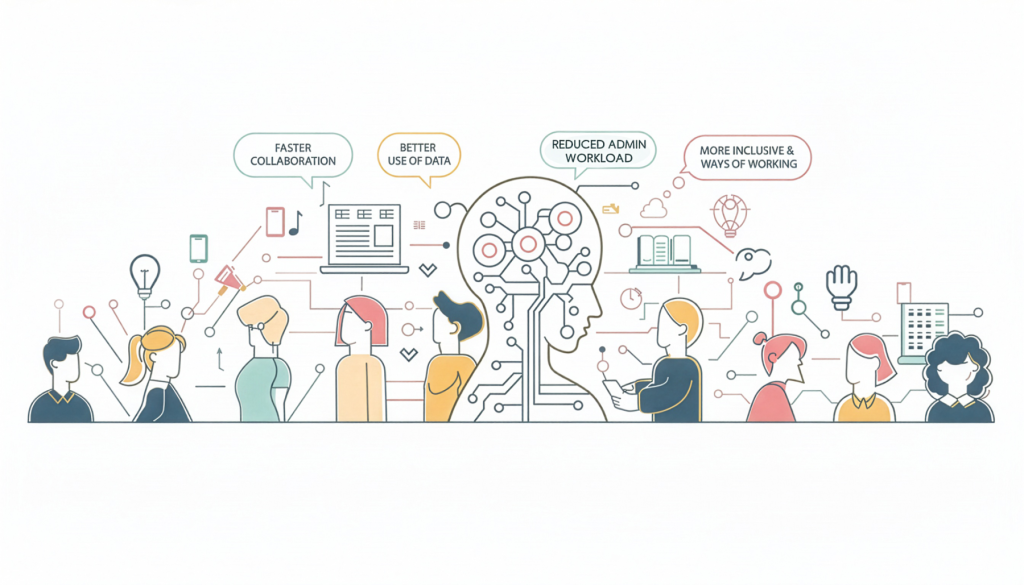
Most roles in schools now involve working closely with colleagues across year groups, departments and sometimes even different sites or partner organisations. Collective technologies are shared digital tools that make this possible by helping staff communicate, collaborate, track progress and stay aligned and informed on key information.
AI is increasingly built into these everyday tools. Rather than acting as separate systems, AI features now support routine school tasks by summarising information, spotting patterns in data and reducing repetitive admin.
As these technologies mature, their impact reaches every part of school life. For example:
- In classrooms:
AI helps teachers create adaptive resources, quickly assess pupil understanding and support differentiated learning. It also improves accessibility for pupils who need additional help.
- Across school operations:
Support teams can use AI-enabled tools to optimise timetables, respond more efficiently to attendance or safeguarding alerts and streamline communication with families.
- For school leadership:
Leaders gain clearer insights into patterns in behaviour, progress and resource use, enabling timely, evidence informed decisions that strengthen whole school improvement.
- For staff capability:
All colleagues – teachers, leaders and support staff – benefit from developing digital confidence, data literacy and a solid understanding of responsible AI use.
- For pupils:
When used thoughtfully, these tools enhance learning, increase inclusion and improve wellbeing by ensuring support is timely, personalised and meaningful.
Reflection:
Think about your role in school and make a note of the following:
Where do shared digital tools already help you work more effectively?
Where do they sometimes create duplication, confusion or extra admin?
Use sticky notes to add your thoughts and findings on the shared whiteboard: AI and Collective Technologies and we will be revisit these in the live session.